
Low Tunnel vs Cold Frame: Which Is Better?
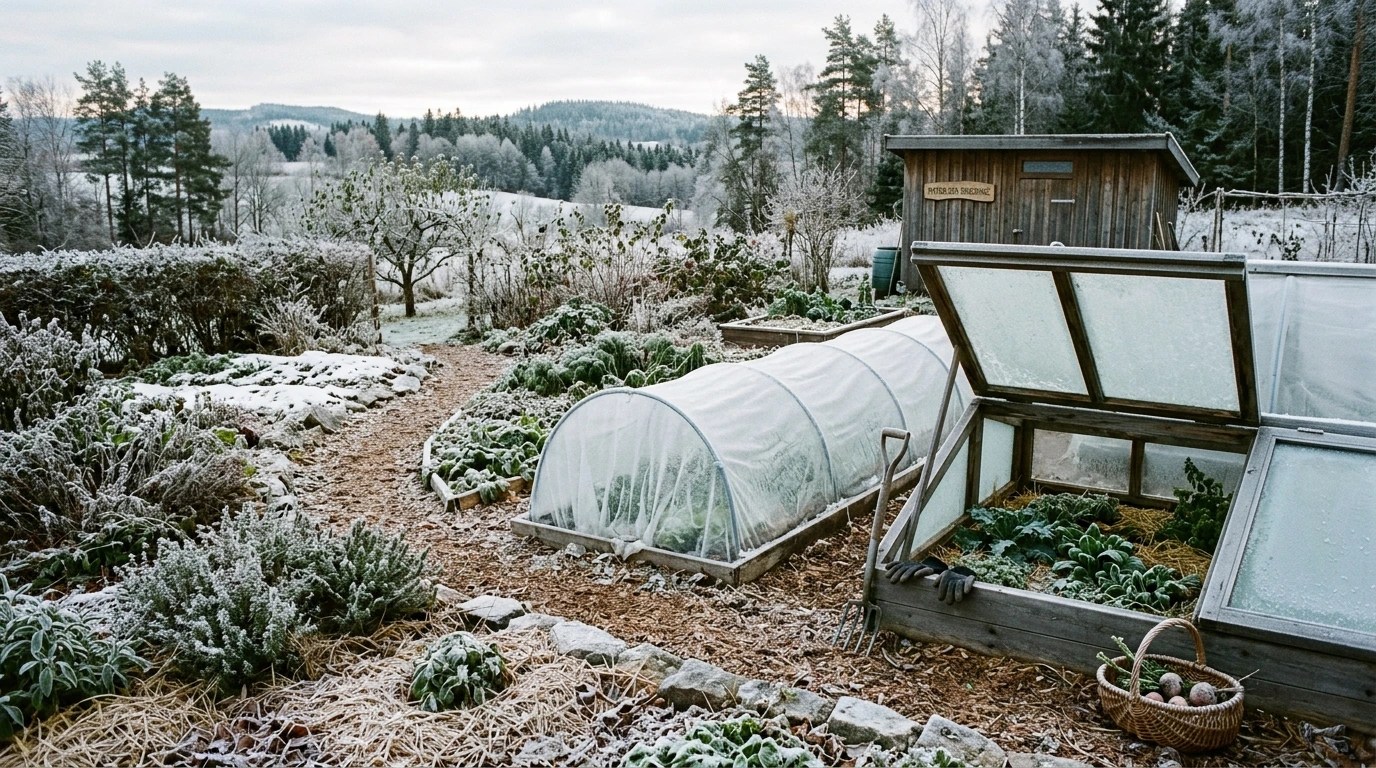
Anyone trying to stretch a cold-climate growing season eventually runs into the same fork in the road: low tunnel vs cold frame. Both structures do a similar job — trapping warmth, blocking wind, and buying weeks of extra growing time at either end of the season — but they go about it in different ways, and each has situations where it clearly outperforms the other.
There isn’t a single correct answer to “low tunnel vs cold frame,” because the better choice really does depend on the crop, the space, the budget, and the climate. This guide breaks down how each one works, where they shine, and how to figure out which fits a particular garden.
What is a low tunnel?
A low tunnel is essentially a miniature greenhouse tunnel — a series of hoops (usually metal or PVC) bent over a garden bed and covered with plastic sheeting, row cover fabric, or sometimes both layered together. It typically stands somewhere between 30 cm and 1 meter tall, runs the length of the bed, and can be lifted or rolled back for ventilation and access.
Next Read: Advantages of Winter
Because it’s built directly over a row or bed rather than as a standalone box, a low tunnel can cover as much or as little ground as needed. Some gardeners use one hoop and a few meters of cover for a single row of greens; others cover an entire bed system with a continuous tunnel running 10 meters or more.
Strengths of a low tunnel:
- Covers long, narrow rows efficiently — ideal for crops planted in traditional row layouts
- Easy to extend or reposition as the season and crop rotation change
- Lower cost per square meter of coverage than most cold frames
- Simple to ventilate by lifting the sides or ends
- Works well with floating row cover for frost protection without full enclosure
Limitations of a low tunnel:
- Less structurally rigid — can collapse under heavy snow load if not tensioned or supported properly
- Offers less thermal mass, so temperature swings inside can be more extreme
- Harder to fully seal against drafts at the ends
- Generally not tall enough for larger crops without a taller hoop design
What is a cold frame?
A cold frame is a fixed, boxed structure — typically wood, brick, or reclaimed materials for the sides, topped with a glazed or clear plastic lid that can be propped open or closed. Think of it as a bottomless mini-greenhouse sitting directly on a garden bed or built into the ground. Many are angled toward the sun to maximize light capture, and the solid sides give them far more thermal mass than a tunnel’s thin plastic skin.
Because a cold frame is a defined, enclosed box, it tends to hold heat more consistently and buffers cold snaps better, especially overnight when temperatures drop fastest.
Strengths of a cold frame:
- Superior heat retention thanks to solid sides and thermal mass
- More stable microclimate — smaller day-to-night temperature swings
- Sturdier structure that handles wind and snow load better
- Excellent for hardening off seedlings or overwintering hardy greens in a defined space
- Can double as a mini nursery or propagation space in shoulder seasons
Limitations of a cold frame:
- Fixed footprint — not practical for long rows or large areas
- Higher upfront cost and build effort, especially for a well-made permanent structure
- Less flexible; moving or resizing it usually means rebuilding
- Can overheat quickly on sunny days if not vented — needs more active management
Head-to-head: how they compare
Temperature stability
This is where a cold frame usually wins. The solid, insulated sides and smaller air volume mean heat is retained more effectively overnight, and the enclosed box buffers against wind chill far better than a layer of plastic stretched over hoops. A low tunnel, especially one covered only in lightweight row cover, offers real but more modest protection — typically a few degrees of frost protection rather than a stable microclimate.
Next Read: 10 Permaculture-Based Winter Gardening Tips for Cold Climates
Coverage area
A low tunnel is the clear winner for anyone growing in rows or wanting to protect a whole bed at once. Cold frames are inherently limited to their box dimensions, which makes them a poor fit for anything beyond a modest, defined planting area.
Cost and materials
Low tunnels are generally cheaper to set up, especially using basic hoops and row cover fabric, and the materials scale linearly with the length of the row. Cold frames require more upfront investment in framing materials and a glazed lid, though a well-built one can last for many years with little maintenance.
Flexibility and mobility
Low tunnels win here too. Hoops can be moved between beds each season, adjusted to fit different crop layouts, and stored flat when not in use. A cold frame is more of a permanent fixture — worth it if the location is well chosen, but a poor fit for gardeners who rotate beds frequently.
Ventilation and heat management
Cold frames need more active attention. On a sunny winter day, temperatures inside a closed cold frame can spike surprisingly high, and the lid needs to be propped open to prevent cooking tender plants. Low tunnels vent more passively — sides can be lifted partway, or the end can simply be left open a crack — making them a bit more forgiving for gardeners who can’t check on things daily.
Wind and snow resistance
A cold frame’s rigid box structure generally handles both better. Low tunnels can be vulnerable to collapse under heavy wet snow unless the cover is tensioned well and the hoops are spaced closely and anchored securely.
Best use case
A low tunnel is usually the better choice for extending the growing season on rows of greens, root vegetables, or brassicas, and for general frost protection over a larger area. A cold frame tends to shine for smaller-scale, high-value uses: hardening off seedlings, overwintering a compact patch of hardy salad greens, or giving cuttings and transplants a stable, protected space to establish.
Next Read: Cold Hardy Edible Evergreen Shrubs
So, which one is actually better?
Neither structure is objectively superior — they’re suited to different jobs, and plenty of gardens genuinely benefit from having both.
A low tunnel makes the most sense for covering rows or beds at scale, for gardeners who want flexibility to reposition protection as crops rotate, and for anyone prioritizing lower upfront cost. It’s particularly well suited to season extension on crops that are already reasonably cold-tolerant and just need a buffer against the worst frosts and wind.
A cold frame makes more sense as a dedicated, semi-permanent structure for a smaller area that needs more consistent, stable conditions — starting seedlings early, hardening off transplants before they go into the open garden, or overwintering a compact bed of hardy greens where reliable heat retention matters more than covering a large area.
For a garden with the space and budget, running both isn’t overkill — it’s arguably the ideal setup. Use a low tunnel to extend the main growing beds through the shoulder seasons, and keep a cold frame nearby for propagation, hardening off, and the handful of crops that benefit most from a stable, enclosed microclimate. In the low tunnel vs cold frame debate, the real answer for many gardeners isn’t picking a winner — it’s matching each tool to the job it does best.
A few common questions
How many degrees of frost protection does each one offer? It varies a lot with materials and cover thickness, but as a rough guide, a single layer of row cover over a low tunnel typically buys 2–4°C of protection, while a double layer or added plastic sheeting can push that higher. A well-built cold frame, thanks to its enclosed structure and thermal mass, often holds a more consistent 5–8°C buffer above outside temperatures, sometimes more on a sunny day even in winter.
Can either one be used to grow through an entire winter in a very cold climate? On their own, neither is usually enough in the harshest climates — both are season-extension tools rather than true winter greenhouses. In climates with extended deep freezes, they work best combined with cold-hardy crop selection, mulching, and sometimes added heat sources or additional insulating layers rather than relying on the structure alone.
Which is easier for a beginner to build? A low tunnel is generally the more approachable first project — a few hoops, some cover material, and basic anchoring is often enough to get started. A well-functioning cold frame benefits from more planning around materials, glazing, and hinge or ventilation mechanisms, though simple versions can be built from repurposed windows and basic lumber.
Do they work well together, or is it redundant to have both? They complement each other rather than duplicate function. A common approach is using a low tunnel over main crop rows for general frost protection, while a cold frame handles the more specialized jobs of hardening off transplants or overwintering a small, high-value planting.
Which one requires more day-to-day maintenance? Cold frames typically need more frequent attention, since their enclosed design can overheat quickly on sunny days and requires manual venting. Low tunnels are somewhat more forgiving, though heavy snow loads and end-panel ventilation still need occasional checking.
